








AIDEVI Wellness Guide
How to Spot Counterfeit or Rebranded nmn Online: A Buyer’s Checklist
A low price, a new seller, or a changed listing should prompt a closer check, not an instant verdict that an NMN supplement is fake. You cannot reliably authenticate a supplement from reviews, bottle color, or a brand name alone. Instead, verify who is selling it, compare the listing with the label, ask whether batch evidence is traceable, and check how you can resolve a problem before you pay.
Check the seller, the exact product and Supplement Facts, batch-linked documentation, package condition, and return support. A very low price, listing change, unusual appearance, or mixed reviews is a reason to ask questions. None of those clues, by itself, proves that a product is counterfeit.
Content
- A practical NMN seller and package checklist
- What do counterfeit, rebranded, and unauthorized mean?
- Do a low price or a changed listing prove an NMN product is fake?
- How can you check the seller before buying?
- Which product and label details should match?
- What can a COA or quality seal actually verify?
- What should you inspect when the package arrives?
- Frequently Asked Questions
A practical NMN seller and package checklist
Use this before paying and again when the parcel arrives. Check an item only when you can verify it through the brand’s official information, a written seller reply, or the marketplace’s terms. This process can reduce uncertainty, but it cannot certify authenticity.
- ☐ Verify the seller. Record the exact storefront or business name and contact route. Compare that seller—not just the marketplace—with the brand’s official sales channels.
- ☐ Match the listing. Check product and format, package count, serving size, amount per serving, other ingredients, and package version. Compare like-for-like prices, then save the URL and screenshots.
- ☐ Check the evidence. Ask for documentation for the exact product and, when available, its batch. Confirm sample type, lot, lab, test date, method, units, and results; check certification claims in the issuer’s directory.
- ☐ Protect the purchase. Read this seller’s return and dispute terms, including the deadline. Pay and message through the platform; do not switch to gift cards, wire, cryptocurrency, or an outside payment link.
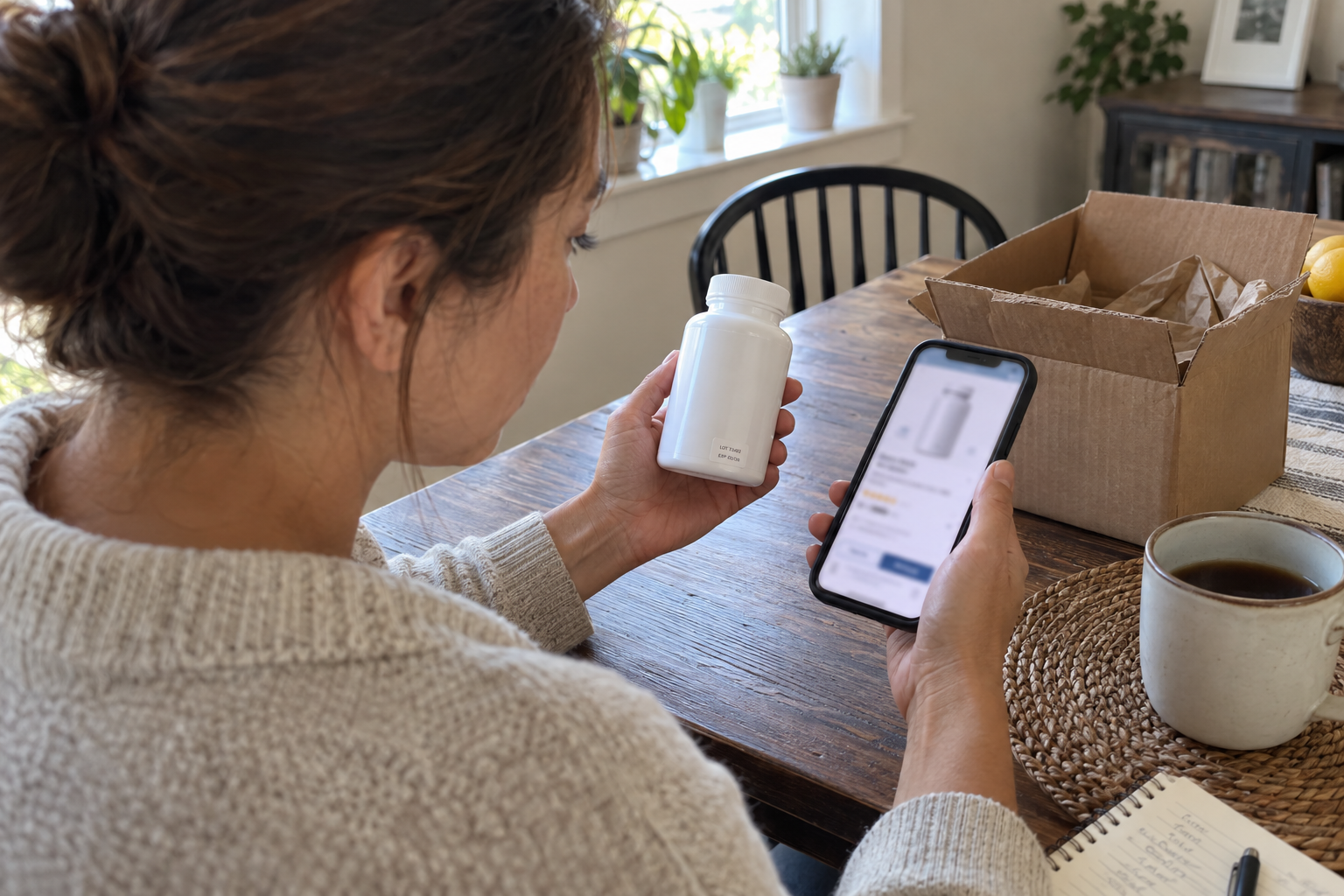
- ☐ Inspect before opening. Photograph the parcel, bottle and label, seal, lot code, and expiration date. Compare them with your order and saved listing; keep the packaging.
- ☐ Pause on a material mismatch. If the seal is broken or missing, the lot is absent or inconsistent, or the label differs materially, do not use the product. Keep it unopened and contact the seller and brand before the dispute deadline.
- ☐ Keep one evidence record. Save the order number, seller name, listing, receipt, photos, lot code, and written replies together.
- ☐ Ask in writing: “For [product], lot [code], can you confirm the source for this exact item and share the batch-specific report for the finished product?”
What do counterfeit, rebranded, and unauthorized mean?
These terms describe different situations, and a marketplace page rarely proves which applies. Counterfeits imitate a brand without authorization; rebranded or private-label products are contract-manufactured and sold under another label, which is not automatically deceptive. But a shared manufacturer does not establish the same formula, serving amount, testing program, or finished batch.
An unauthorized seller is also not the same as a counterfeit manufacturer. The item might be genuine but resold outside the brand’s preferred channel, stored or handled differently, or sold without the brand’s customer support. Conversely, an authentic-looking listing does not prove that its seller obtained the item through a traceable route.
For a broader product decision, AIDEVI’s NMN supplement selection guide covers label and quality considerations. This article focuses on the separate purchase question: can you verify the seller, the exact item, and your options if something does not match?
Do a low price or a changed listing prove an NMN product is fake?
No. A steep discount can reflect a promotion, an older package, a different serving count, shipping costs, or a seller clearing inventory. A listing that moves or disappears may have been updated for ordinary business reasons. These signals matter because they make it harder to confirm what is being sold, not because they prove fraud.
Compare the same product version on an official brand page. Check the amount per serving, servings per container, capsule count, other ingredients, and whether shipping or taxes are included. A large front-label number may describe the total amount in a container rather than the amount in one serving. A comparison based only on price per bottle can therefore be misleading.
Treat stock photos, vague seller details, copied product descriptions, unsupported health promises, and pressure to pay outside the marketplace as reasons to pause and verify. FTC guidance recommends checking seller contact information, return terms, item photos, and payment protections; it also warns that very low prices can be a concern without making them conclusive proof of a fake item [2].
How can you check the seller before buying?
Start at the brand’s official website. If it names authorized retailers, compare the exact seller account—not just the marketplace or product title—because a marketplace may host independent sellers.
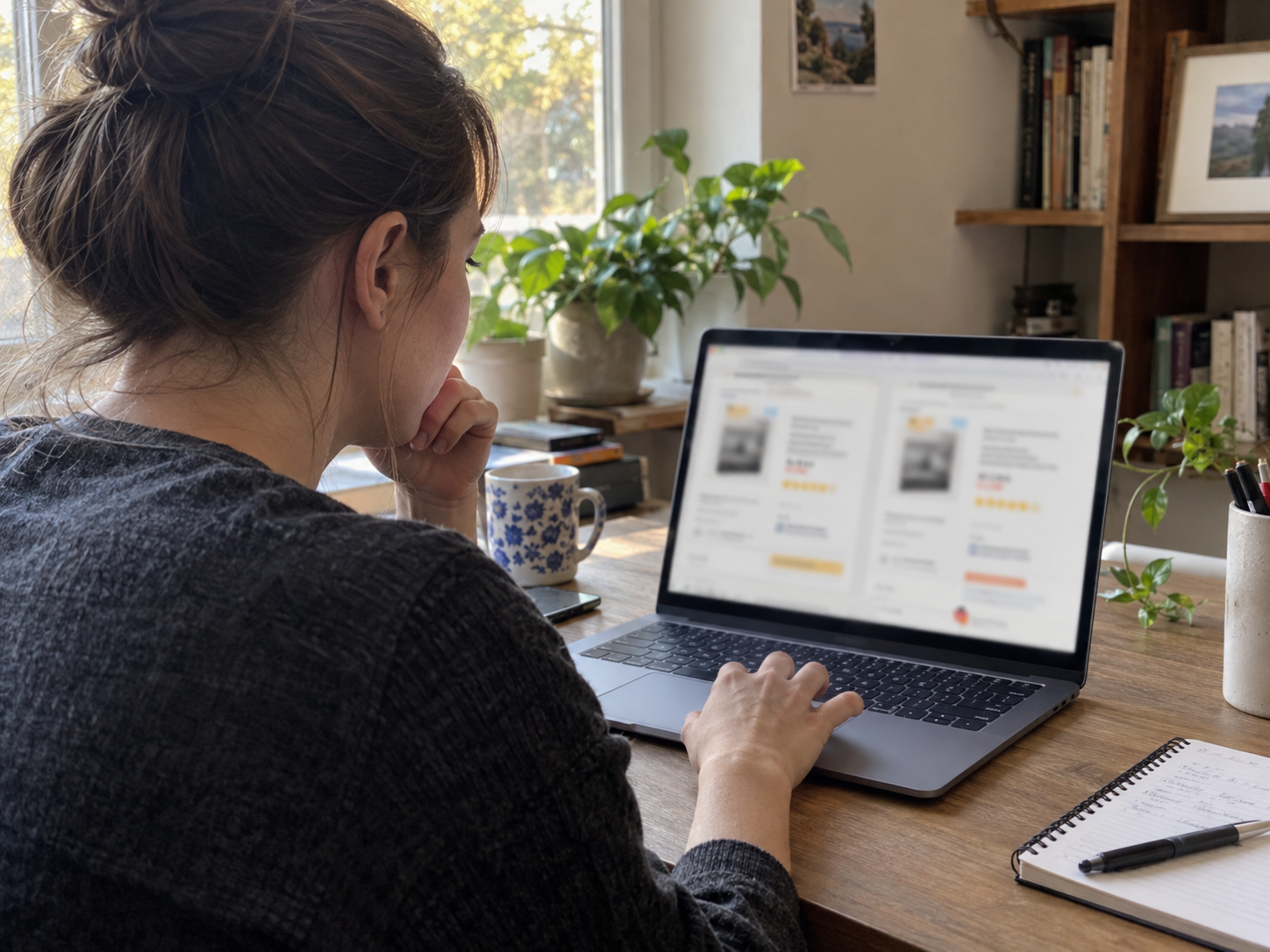
Recent reviews may reveal patterns in delivery or customer support, but they cannot verify a bottle’s contents. Keep pre-purchase questions and replies in the marketplace so there is a record if you need help.
Which product and label details should match?
Use current images and information from the brand’s official product page as a reference, then compare the delivered label with the listing. In the United States, dietary supplement labels generally identify the product, the manufacturer, packer, or distributor, the Supplement Facts panel, other ingredients, and net quantity. The panel includes serving size and ingredient amounts where required by the applicable rules [1].
A practical comparison includes the exact product name and format, capsule or tablet count, serving size, NMN amount per serving, other active ingredients, and any lot or expiration information shown on the package. Do not compare a raw-material listing with a finished capsule product as if they were interchangeable. Confirm whether the seller is showing a current package or an older label version, and ask the manufacturer to explain any material difference you cannot reconcile.
Be wary of claims that a supplement is “FDA approved.” FDA does not approve dietary supplements for safety and effectiveness before they are sold to the public. Facility registration, a manufacturing statement, or a quality logo is not the same as FDA approval of a supplement or endorsement of its claims [1].
If you are considering an AIDEVI product, use the official NMN 18000 product page to check the current product identity and label information. Product names and packages can change, so compare what is actually offered today rather than relying on an old screenshot or a third-party listing image.
What can a COA or quality seal actually verify?
A Certificate of Analysis (COA) can help answer a narrow quality question only when you can connect the report to the product and sample that matter. Check the product name, whether the sample was raw material or finished capsules, lot or batch identifier, laboratory, test date, method, specification, measured result, units, and conclusion. A PDF with a brand logo or a single purity number is not enough to tell you what was tested.
If a report number can be verified directly with the laboratory, use that route. If it cannot, ask the brand for clarification using the product name and the lot code on the bottle. A report for a previous batch, a raw ingredient, or a different formula may provide background, but it does not automatically verify the finished item in your order. For the detailed field-by-field review, use AIDEVI’s guide to reading an NMN COA.
Quality seals also have defined scopes. NIH’s Office of Dietary Supplements explains that independent testing programs differ and that a seal does not guarantee that a supplement is safe or effective [3]. NSF likewise distinguishes certification to a specific standard from the broad phrase “third-party tested”; its programs may include product testing, label review, facility audits, and ongoing monitoring, depending on the certification [4].
Look up a claimed certification in the certifier’s own directory and confirm the exact product or facility and the program scope. A real manufacturing certificate can tell you something about a facility’s systems; it does not prove that a particular online seller is authorized or that the bottle in your cart came from a specific batch. AIDEVI’s public lab reports and manufacturing standards page is one example of where to review a brand’s published documentation. Read it as documentation to evaluate, not as a substitute for checking the listing and bottle.
What should you inspect when the package arrives?
Before opening, compare the bottle with your order. Photograph the label, seal, lot, and expiration details, and keep the shipping carton if anything differs.
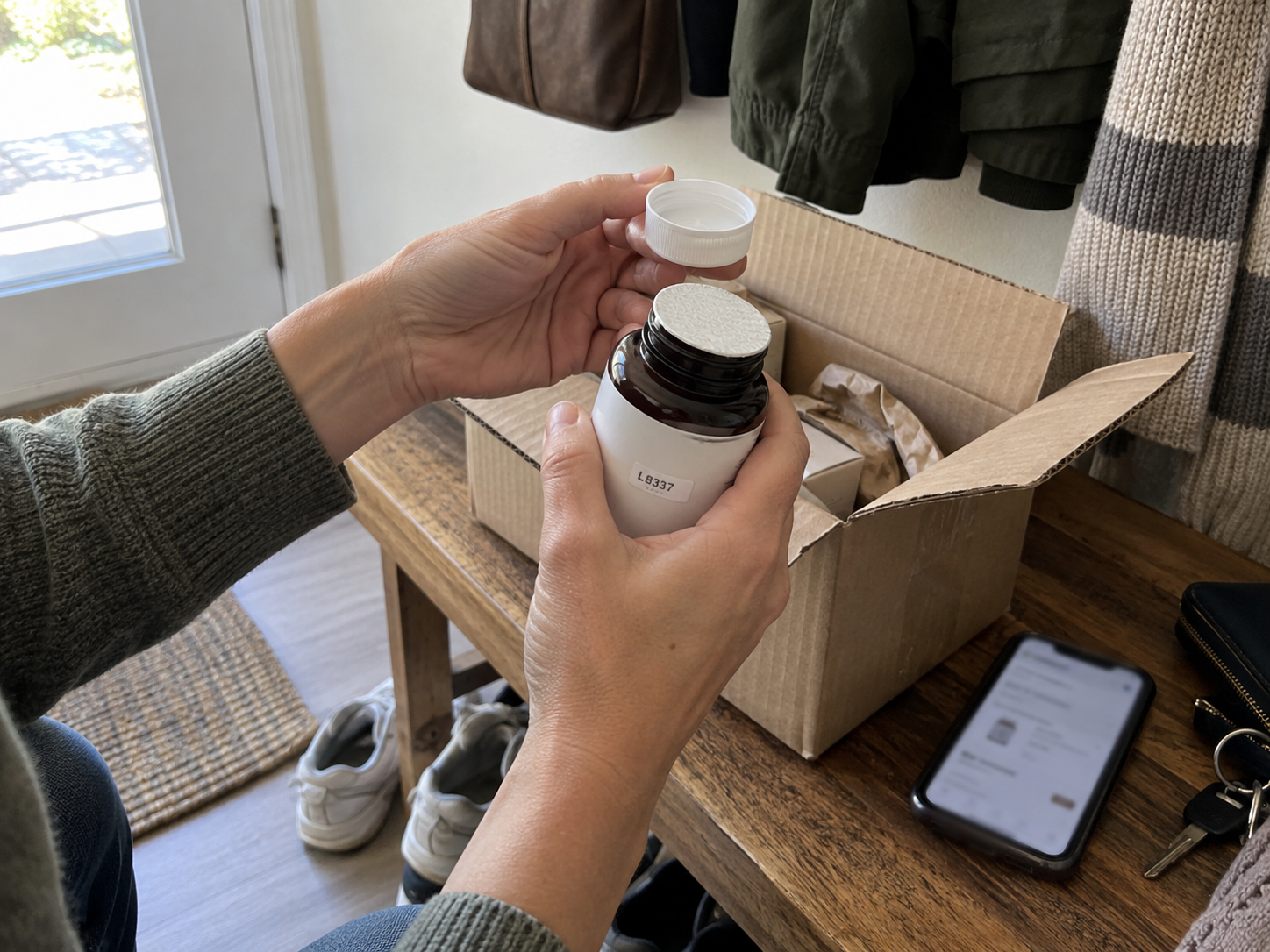
Appearance alone is not an authentication test. Powder color, odor, capsule size, or a change in packaging can vary for reasons that are not visible to a shopper, and a normal-looking bottle does not prove its contents. Do not taste an unfamiliar product or try a home chemistry test. If the safety seal is missing, the lot information is absent or inconsistent, or the product differs materially from the official label, leave it unopened and ask the seller and brand to verify it.
Keep the order number, saved listing, receipt, package photos, lot code, and messages together. Use the seller’s return or dispute process before its deadline; protections vary by platform [2].
What if the seller or product still cannot be verified?
Do not turn uncertainty into a public accusation. Send the seller a concise written question: “Can you confirm the manufacturer or authorized source for this exact product, and provide the batch-specific documentation for lot [code]?” Then contact the brand through the contact details on its official site. For an AIDEVI order, use the official customer support page and include the order number, product name, and lot code.
If you cannot reconcile the answer with the label, lot, or order, keep the product unopened and use the platform’s documented return or dispute channel. For U.S. shoppers, the FTC accepts reports about suspected dishonest businesses, while FDA accepts dietary supplement product-quality complaints through its consumer reporting routes. Those systems collect reports; submitting one does not itself establish that a product is counterfeit. Outside the United States, use the relevant local marketplace and consumer-protection authority.
If you already used the product and experience a serious or concerning reaction, stop using it and contact a healthcare professional. FDA recommends reporting supplement-related adverse events or product concerns, even when you are not certain the product caused the problem [1]. This is a health-safety step, separate from deciding whether a seller or item was authentic.
AIDEVI’s NMN quality and safety guide offers broader ingredient and product context. Use it alongside the current label and the protections that apply to your purchase.
Conclusion
No single clue can authenticate an NMN supplement bought online. A low price, a listing that changes, an unusual appearance, or mixed reviews should lead to a verifiable question—not a claim that a seller is fraudulent. Check the seller, match the product and label, connect available documentation to the lot, inspect the package, and understand your return options before checkout. When a key detail remains unclear, pause the purchase or keep the delivered product unopened while you ask the brand and marketplace for help.
Frequently Asked Questions
Can a low NMN price prove that a supplement is counterfeit?
No. Discounts, serving count, formula, shipping, and package version can affect price. Compare like-for-like products and verify the seller and label. Treat a price that seems inconsistent as a reason to ask questions, not as proof.
Is rebranded NMN always counterfeit?
No. A legitimate company may sell a contract-manufactured formula under its own brand. What matters is transparent labeling, traceable product information, and a seller that can answer reasonable questions. A shared manufacturer alone does not prove that two products have the same formula or quality controls.
Does a COA prove that the bottle I received is authentic?
Not by itself. A COA is more useful when the product, sample type, lab, tests, and lot match the item being evaluated. Even a valid report does not establish the seller’s authorization or prove clinical benefits.
Does “third-party tested” mean a supplement is FDA approved?
No. Testing and certification programs have different scopes, and FDA does not approve dietary supplements for safety and effectiveness before they are marketed. Verify the testing program and what it covers.
Can powder color or capsule appearance identify fake NMN?
No reliable conclusion can be made from appearance alone. Photograph a material difference, keep the product unopened if you are concerned, and ask the brand or seller to check the exact lot.
What should I do if a seller will not answer questions about a batch?
Do not pay outside the platform or open a product you cannot verify. Save the listing and messages, contact the brand through its official site, and choose a seller with clear support and return terms if the uncertainty remains.
References
These statements have not been evaluated by the Food and Drug Administration. This product is not intended to diagnose, treat, cure, or prevent any disease.
