








AIDEVI Wellness Guide
nmn Before and After: What to Track at 30, 60, and 90 Days
If your NMN before-and-after results are unclear, do not automatically increase the dose or add more products. First define what you expected to change, establish a baseline, keep the routine consistent, and record the same small set of measures. Then review whether you are seeing a repeatable pattern, a temporary life change, or no meaningful difference.

- A lack of a noticeable sensation does not prove that NMN changed nothing, and a noticeable sensation does not prove a health benefit.
- Use one stable routine, record a small set of meaningful measures, and review the pattern at 30, 60, and 90 days.
- Check the product label and batch information before blaming the ingredient or changing several variables at once.
- Use the tracking template in this guide, then pause and ask a healthcare professional about persistent symptoms, medication use, pregnancy, nursing, or a medical condition.
Content
What does “not feeling NMN” actually mean?
Most people use “working” to mean that they feel more energy, sleep better, recover faster, or notice a visible change. Those are understandable goals, but they are not interchangeable measures. NMN is discussed as a precursor involved in NAD+ metabolism. A pathway effect, a change in a blood measure, and a noticeable day-to-day benefit are three different questions.
A person may notice no immediate sensation while still following a consistent routine. Another person may feel more alert after changing NMN, caffeine, sleep, exercise, or meal timing at the same time. The sensation is real as an experience, but it does not identify the cause by itself. AIDEVI’s NMN effects and safety guide uses the same boundary: describe NMN as wellness support connected to NAD+ metabolism, not as a guaranteed anti-aging result.
Before you judge the result, write down the exact question. “Is NMN working?” is too broad for a useful review. “Did my average sleep duration change?” or “Did my afternoon energy score improve without changing coffee?” is more specific. A clear question also makes it easier to decide when you have enough observations to continue, pause, or ask for professional input.
A useful NMN review separates three layers: what the ingredient is biologically connected to, what a test can measure, and what you experience in daily life. Track all three as separate questions. Do not turn a change in one layer into proof of a change in another.
The 30/60/90-day structure below is a practical observation framework, not a validated clinical timeline and not a promise that a benefit will appear by day 90. Its purpose is to improve the quality of your notes and your next decision.
What can human research tell you?
Human studies help set expectations, but they do not provide a personal pass or fail test. In one randomized, placebo-controlled study, healthy adults took 250 mg of NMN daily for 12 weeks. Whole-blood NAD+ increased in the NMN group, and the researchers reported no obvious adverse effects during the study period [1]. That finding supports a narrow conclusion: under those study conditions, NMN changed a measured NAD+-related marker. It does not show that every participant felt more energy.
A separate randomized trial in healthy middle-aged adults studied 300, 600, and 900 mg daily for 60 days. The study reported higher blood NAD concentrations and good short-term tolerability, while the size, population, formulation, and endpoints were specific to that trial [2]. Treat study doses as research conditions, not as a general personal dosing instruction.
A systematic review of randomized trials included ten studies with 437 participants. The studies were short, used different doses, and found no statistically significant improvement in the physical-performance measures examined, although no serious adverse effects were observed in the included trials [3]. This is exactly why a 30/60/90-day review should be conservative. It can improve your record keeping and decision quality. It cannot manufacture a result that a study did not establish.

What should you track at 30, 60, and 90 days?
The best tracker is small enough to use consistently. Choose one primary outcome, two supporting observations, and one routine check. If you record twelve variables every day, the process can become another source of noise. The framework below is designed for a wellness routine, not for diagnosing a condition.
| Checkpoint | What to record | What the review can tell you |
|---|---|---|
| Before day 1 | Your goal, normal sleep window, usual caffeine, activity pattern, current supplements, product serving, and any symptoms already present. | Whether you have a stable baseline and whether another factor is already changing. |
| Day 30 | Days taken as directed, sleep duration, digestion, a simple energy rating, and any new or unusual response. | Whether the routine is feasible and whether an early pattern deserves observation. |
| Day 60 | The same measures, plus major changes in training, travel, stress, diet, caffeine, or other supplements. | Whether the pattern is repeatable or only appeared during a temporary life change. |
| Day 90 | A short summary of the primary outcome, adherence, unwanted changes, cost, and what you would change next. | Whether continuing is reasonable for your goal, whether a clinician should review the situation, or whether the experiment should end. |
For the daily entry, keep the same short order: mark whether you followed the label, note sleep duration and quality, record digestion or other noticeable changes, rate energy in the same part of the day, and add one sentence about unusual stress, travel, illness, or training. This takes less than two minutes and gives your later review useful context. Do not rewrite the story each day to fit a hoped-for result. Record what happened before you decide what it means.
Use a seven-day average when the measure naturally fluctuates. For example, one poor night does not define sleep quality, and one unusually productive morning does not prove a supplement effect. If you use a watch or app, keep the device, measurement window, and interpretation consistent. Wearables can help you see trends, but they cannot establish why a trend changed.

How can you use a simple daily NMN tracking template?
Copy one row for each day. Keep the language factual and fill it in before deciding whether the routine helped. A short record is more useful than a detailed story that changes every time you reread it.
| Date | Routine followed? | Sleep | Digestion or symptoms | Energy | Changed variables |
|---|---|---|---|---|---|
| ________ | Yes / No / Adjusted | Hours and simple quality note | None or describe briefly | Same-time rating | Caffeine, travel, training, illness, or stress |
| ________ | Yes / No / Adjusted | Hours and simple quality note | None or describe briefly | Same-time rating | Caffeine, travel, training, illness, or stress |
At day 30, check whether the routine is feasible. At day 60, check whether the pattern remains after ordinary life changes. At day 90, decide whether the routine is worth continuing for your stated goal, whether you need professional advice, or whether you have enough information to stop. This template improves decision quality. It does not create evidence of a clinical effect.
How can you troubleshoot an unclear result?
Use a fixed order so you do not create more confusion. Start with adherence. If you took the product on some days, changed the serving, or moved the timing frequently, you may not have a consistent trial of the routine. Review the label and follow the current directions. Do not compensate for missed days by taking extra servings unless a qualified professional tells you to do so.
Next, check competing changes. Caffeine, sleep debt, a new training block, illness, travel, alcohol, calorie restriction, work stress, and other supplements can all affect the same outcomes people hope NMN will influence. If you began two or three products together, you cannot confidently attribute a later change to one ingredient. Return to one stable variable at a time when it is safe and appropriate.
Then check the question itself. If your only test is “I did not feel a boost,” you may be looking for an acute stimulant-like sensation from a product that is not positioned that way. A better question might be whether the routine is convenient, well tolerated, and compatible with your broader wellness goals. If the goal is persistent fatigue, poor sleep, dizziness, or another concerning symptom, look for the cause with a healthcare professional rather than using NMN as a self-test.
Finally, decide what would count as enough information. A neutral result is still information. It may mean that the outcome is too variable, the study window is too short for your question, the product does not fit your priorities, or the expected benefit is not established. Continuing indefinitely without a review point can turn uncertainty into unnecessary cost.
Could the product or routine be the reason?
Before concluding that NMN itself failed, verify what you actually used. Read the Supplement Facts panel, serving size, ingredient form, storage instructions, lot number, and expiration information. AIDEVI’s NMN certificate-of-analysis guide explains why a batch-linked report matters and why a purity number alone cannot prove identity, clinical efficacy, or suitability for every person.
Keep quality evidence and outcome evidence in their proper lanes. A product can have clear documentation and still produce no noticeable change for a particular user. Conversely, a strong personal impression cannot prove the product’s identity or batch quality. The FDA explains that dietary supplements are not approved in advance for safety and effectiveness in the same way as medicines, so consumers should read labels and speak with a healthcare professional when needed [4].
For a current AIDEVI formula, start with the official NMN 18000 product information and compare its listed serving details with the bottle you have. If you want broader ingredient context, the NMN supplement guide separates human research, product quality, and realistic expectations. AIDEVI’s before-and-after NMN discussion can also help you think about time windows without turning a personal story into proof.
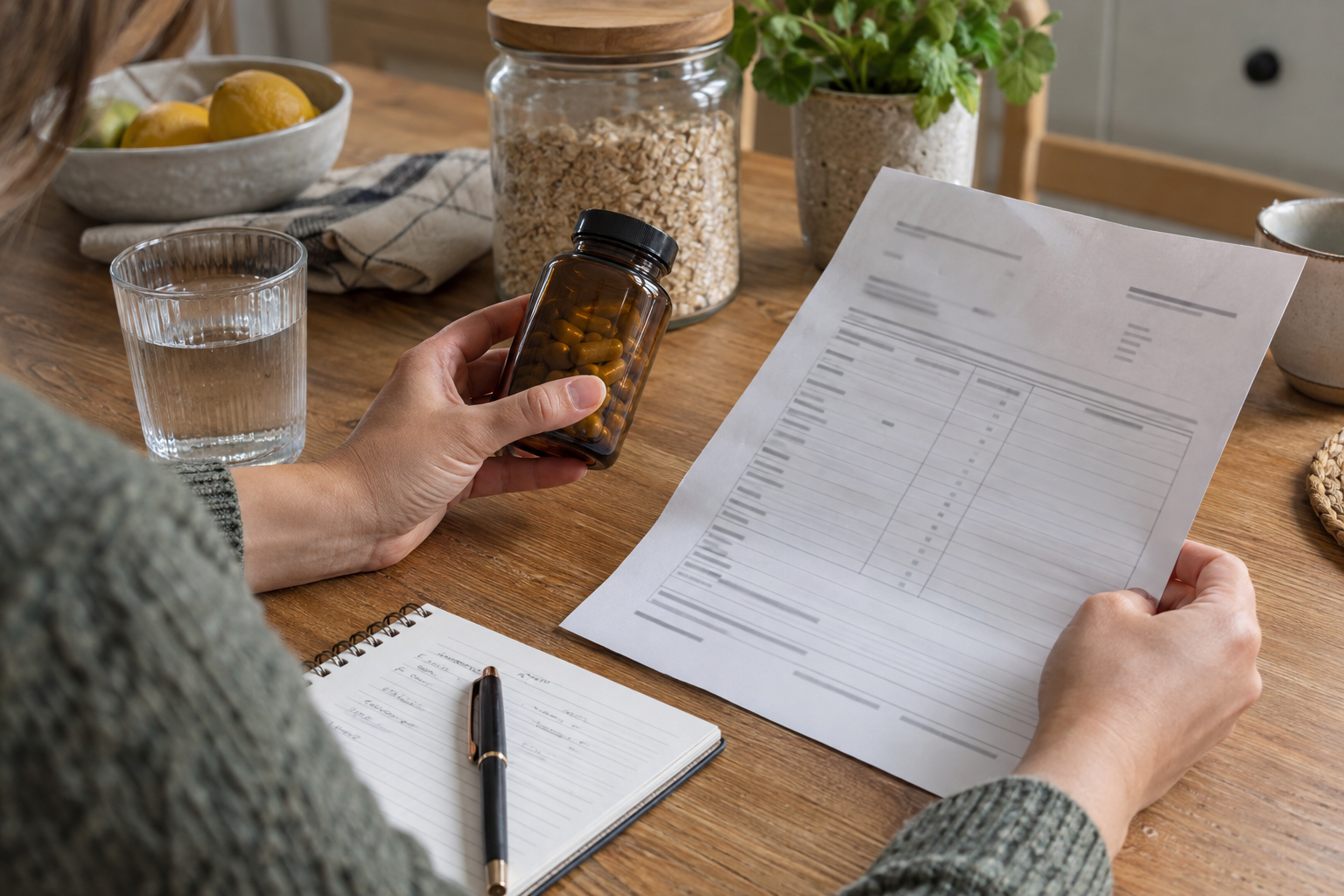
A simple continue, pause, or review decision
| Best fit | Consider instead | Avoid or pause if |
|---|---|---|
| A stable routine, a realistic wellness goal, clear label information, and no concerning response. | Improve sleep, food quality, movement, hydration, and stress habits first when those foundations are inconsistent. | You develop a persistent or concerning symptom, take medication, are pregnant or nursing, or manage a medical condition without professional guidance. |
Conclusion
When NMN does not feel like it is working, the most useful next step is better observation, not automatic escalation. Define the outcome, establish a baseline, keep the routine stable, and review a small set of measures at 30, 60, and 90 days. Separate pathway biology, measurable markers, and daily experience. A neutral or unclear result is a legitimate result, and it may be a reason to stop spending, simplify the routine, or ask a healthcare professional for a better explanation.
If you want to understand the broader biology, AIDEVI’s latest NMN research overview explains why absorption and metabolism remain active research questions. For the role of NAD+ pathways in healthy aging research, see the guide to NAD+ decline, sirtuins, and PARP. These resources are useful for context. They do not replace individual medical advice or guarantee a particular result.
Your next practical step
Use the NMN tracking template for one stable review period. If you are evaluating a product, compare the current label and serving information with the official AIDEVI NMN product information and keep quality questions separate from outcome questions.
Use the tracking template Review batch quality questionsFrequently Asked Questions
How long should you track NMN before reviewing the result?
A 30/60/90-day structure gives you three useful review points, but it is not a promise that a benefit will appear by day 90. Use the window to check adherence, consistency, tolerance, and the specific outcome you chose.
Does not feeling more energy mean NMN is not working?
No. A subjective sensation is only one possible outcome, and it is influenced by sleep, caffeine, activity, stress, and expectations. It is also not enough to prove that NMN changed a health outcome.
Should you increase the dose if nothing changes?
Do not automatically increase it. Study doses are not personal prescriptions, and increasing a serving can add cost or risk without answering the original question. Review the product directions and ask a healthcare professional about your situation.
Can a wearable prove that NMN improved sleep or recovery?
No. A wearable can help you observe trends when you use it consistently, but its estimates are not a diagnosis and do not establish cause. Pair device data with sleep duration, routine notes, and how you feel.
When should you pause NMN and ask a professional?
Pause and seek qualified advice for persistent or concerning symptoms, medication use, pregnancy, nursing, a medical condition, planned surgery, or a major unexplained change in health. Do not use NMN to self-manage a symptom that needs evaluation.
References
- [1] Okabe et al., “Oral Administration of Nicotinamide Mononucleotide Is Safe and Efficiently Increases Blood Nicotinamide Adenine Dinucleotide Levels in Healthy Subjects,” PubMed.
- [2] Yi et al., “The efficacy and safety of β-nicotinamide mononucleotide supplementation in healthy middle-aged adults,” PMC.
- [3] Wen et al., “Improved Physical Performance Parameters in Patients Taking Nicotinamide Mononucleotide,” PubMed.
- [4] U.S. Food and Drug Administration, “FDA 101: Dietary Supplements,” FDA.
These statements have not been evaluated by the Food and Drug Administration. This product is not intended to diagnose, treat, cure, or prevent any disease. Individual results may vary. Consult a healthcare professional before starting any new supplement, especially if pregnant, nursing, taking medication, managing a medical condition, or planning surgery.
